When a roofing contractor handles shingle replacement, the process begins with a thorough inspection of the roof to assess the extent of damage and determine which shingles need to be replaced. This initial evaluation is critical because it helps identify underlying issues such as water damage, rot, or structural problems that might not be immediately visible. The contractor examines the condition of existing shingles, checks for loose or missing pieces, and looks for signs of wear caused by weather exposure. Based on this assessment, they develop a plan tailored to address specific needs while ensuring the roof’s integrity is maintained.
Once the inspection is complete and materials are selected, usually matching new shingles with existing ones in color and style when possible, preparation work starts. The roofing contractor takes safety precautions by setting up ladders securely and wearing protective gear. They may also lay down tarps around the house to catch debris and protect landscaping or outdoor furniture from falling materials during removal.
The next step involves carefully removing damaged or worn shingles without harming surrounding areas. This requires skillful use of tools like pry bars or shingle removers to lift old shingles off the roof deck gently. Nails securing these shingles are uncover more extracted carefully to avoid damaging underlying wood sheathing. If any sections of decking show signs of deterioration due to moisture infiltration or age, those boards are replaced before proceeding further.
After clearing away all defective shingles and addressing any decking repairs needed, attention turns toward preparing surfaces for new installation. The area must be clean and dry; contractors often remove dust or leftover nails that could interfere with adhesion or cause unevenness under new materials.
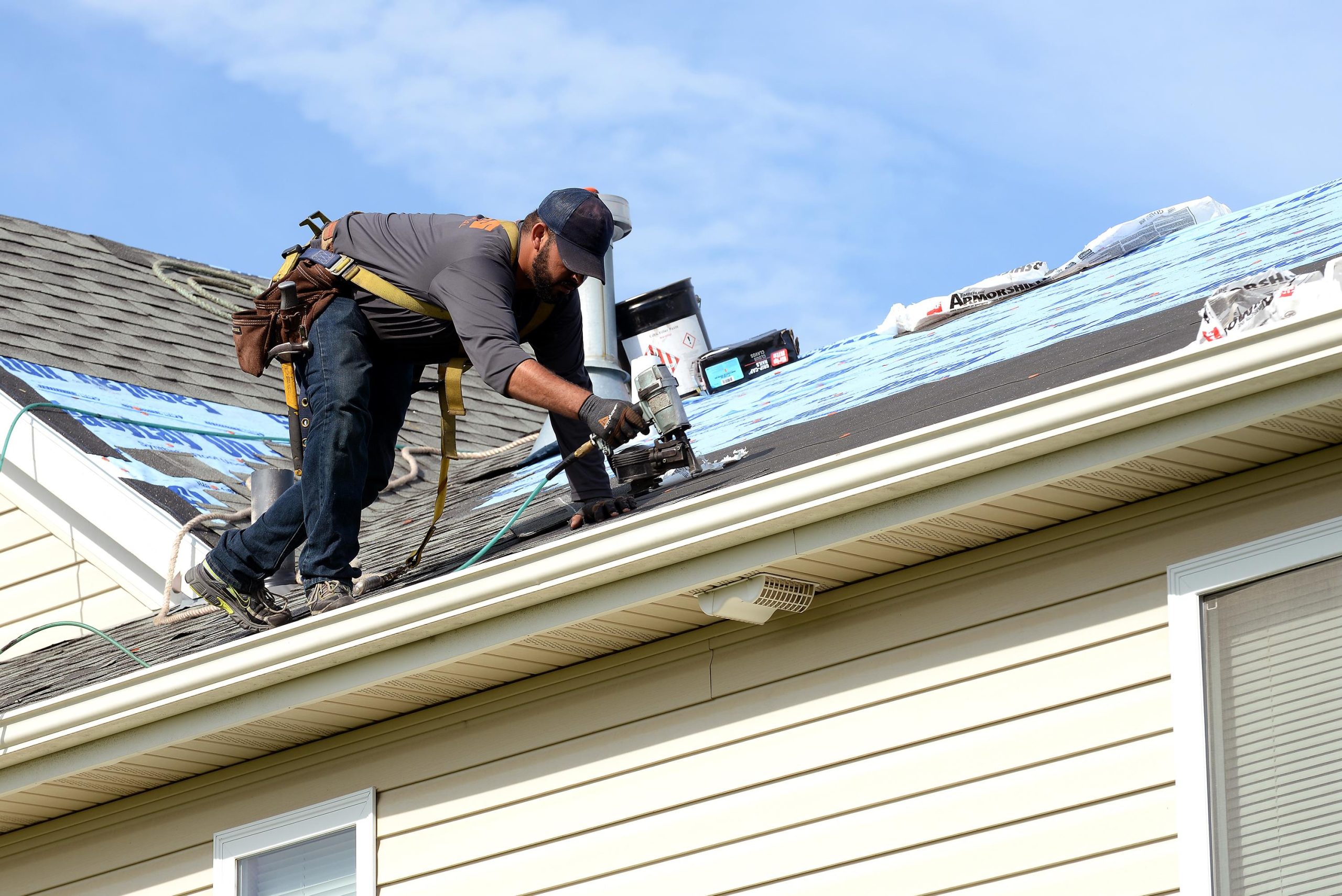
Installing replacement shingles demands precision so that they align correctly with adjacent rows for both functionality and appearance purposes. Contractors start at the bottom edge of each section working upward in overlapping layers designed to shed water efficiently while resisting wind uplift forces during storms.
Throughout installation, nails are driven into designated spots on each shingle tab following manufacturer guidelines ensuring secure attachment without causing splits or cracks in material integrity.
Finally, once all replacement shingles have been installed properly across affected areas along with flashing adjustments if necessary around chimneys or vents for waterproofing effectiveness; cleanup follows promptly removing debris from job site leaving property neat.
By managing every stage systematically-from inspection through cleanup-a professional roofing contractor ensures shingle replacement extends roof lifespan while maintaining home protection against elements effectively.
About the Author